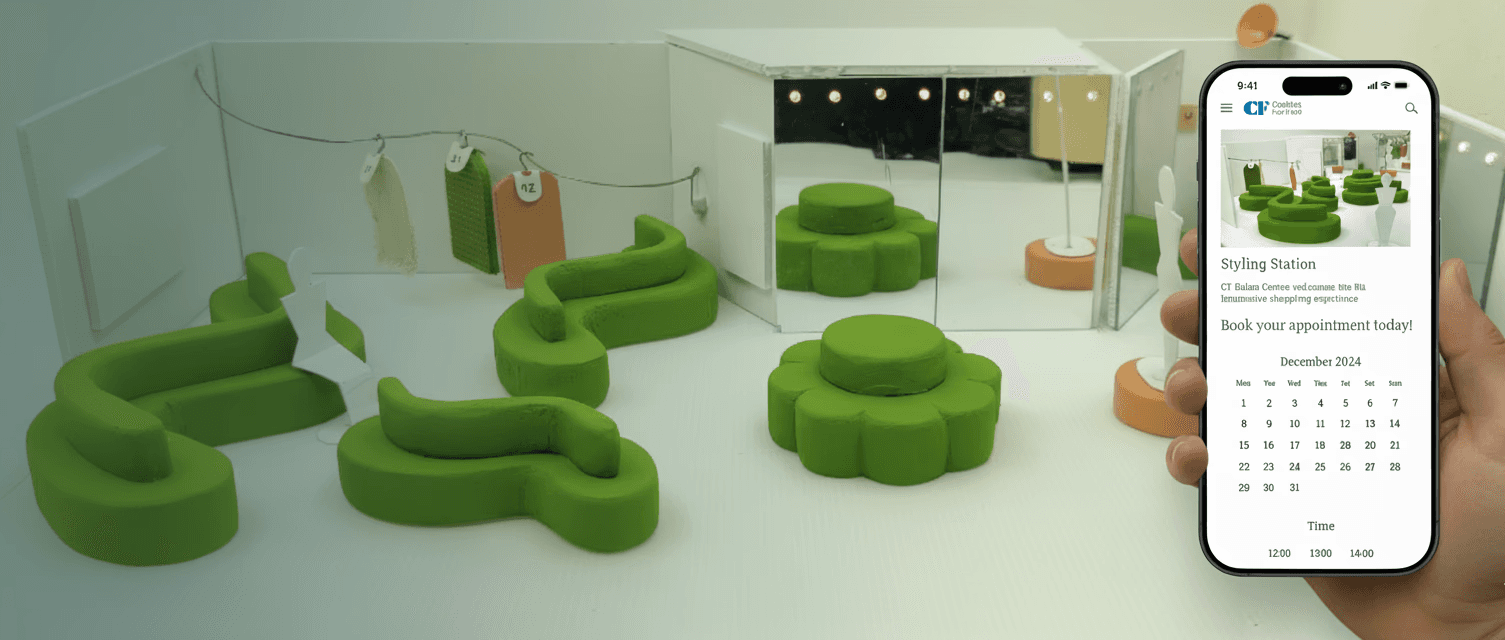
Challenge
Skills
Service Design, Design strategy, Wireframing, Model Making, Design Research, Human Centered Design
My role
Service and UX/UI Designer (Team Project)
Duration
12 weeks
Year
2024
Solution
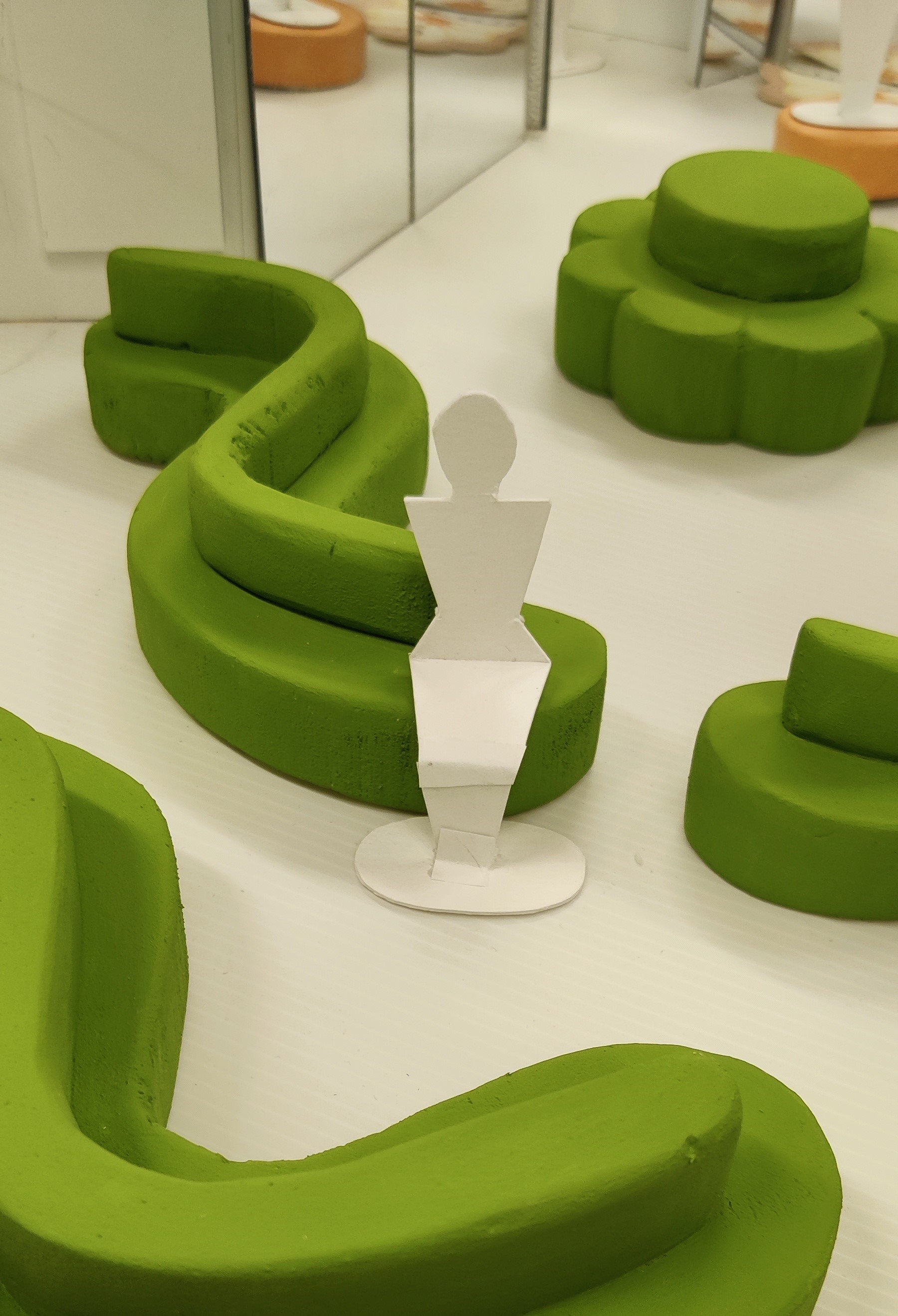
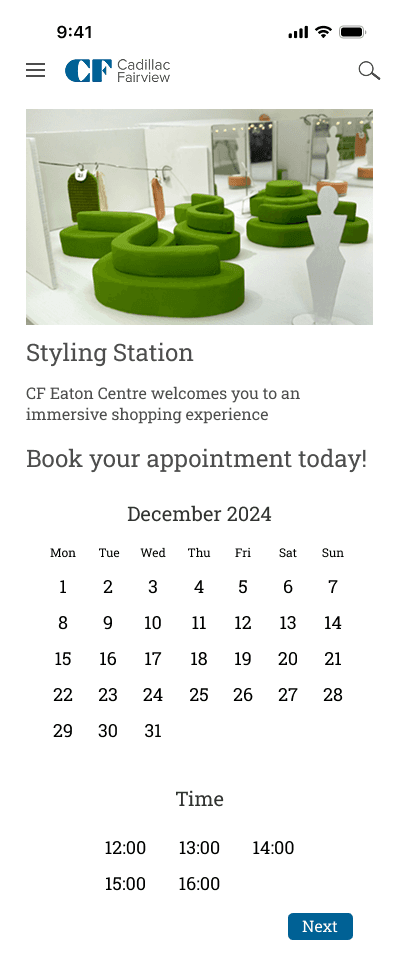
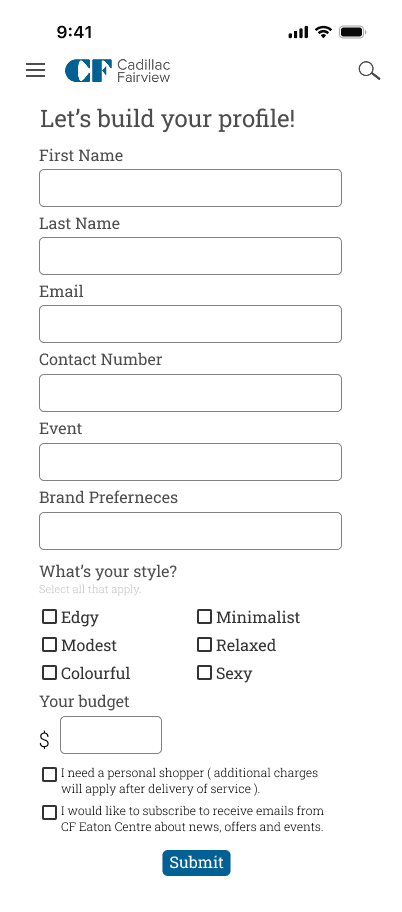
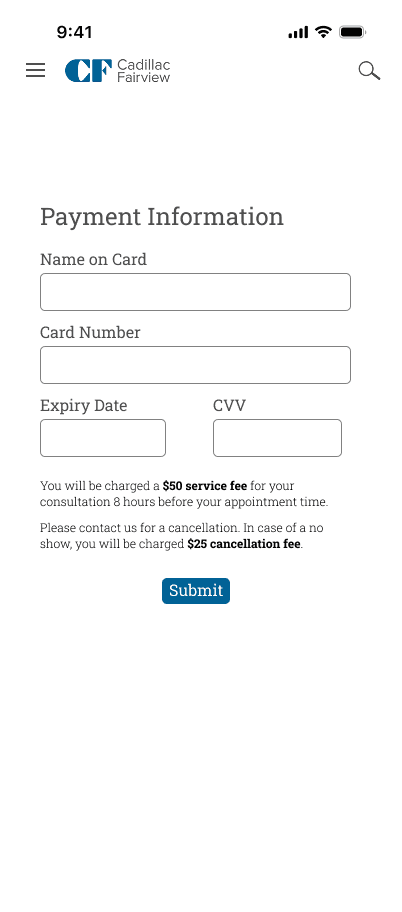
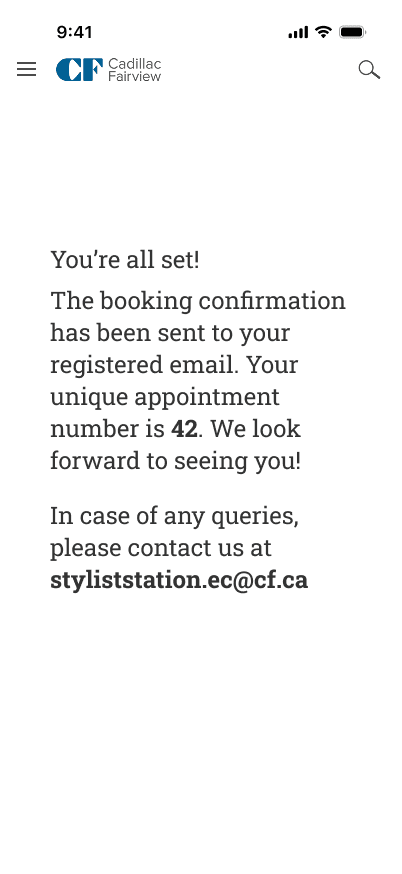
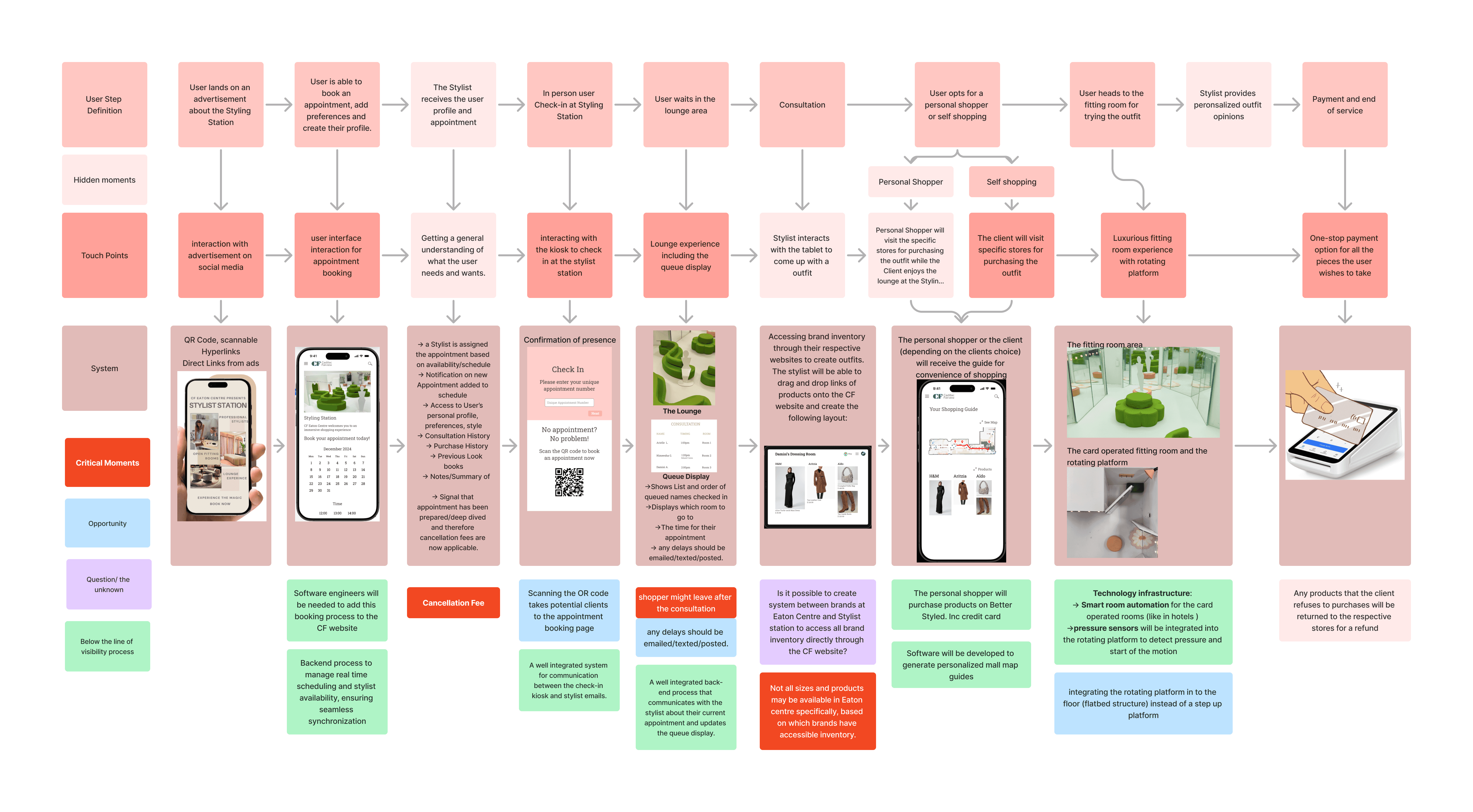
The user will begin their dynamic experience by checking in with their unique appointment number and then heading over to the lounge area.
The lounge area within the Stylist Station is designed to foster community interaction by creating a welcoming environment where shoppers can comfortably engage with one another. As individuals wait for their personal styling appointments, the open layout encourages them to observe and connect with others.
After the stylist consultation, the user must choose whether to shop by themselves or get a personal shopper to shop for them.
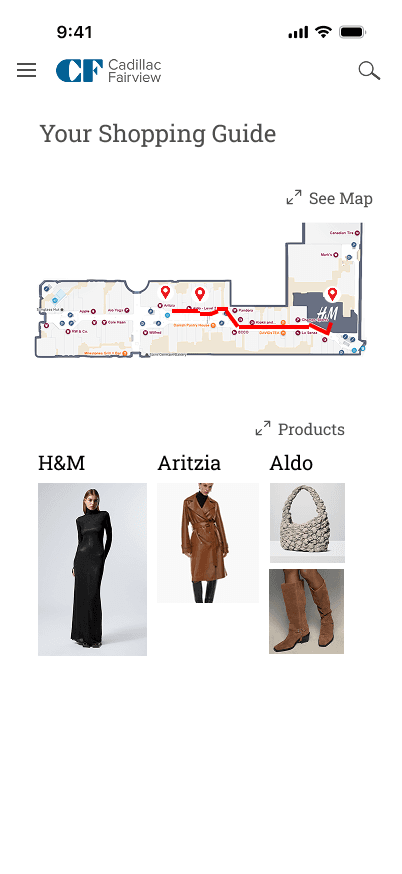
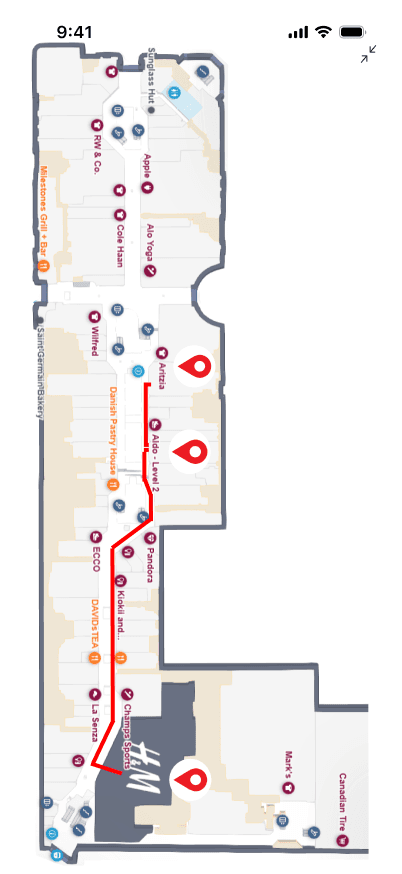
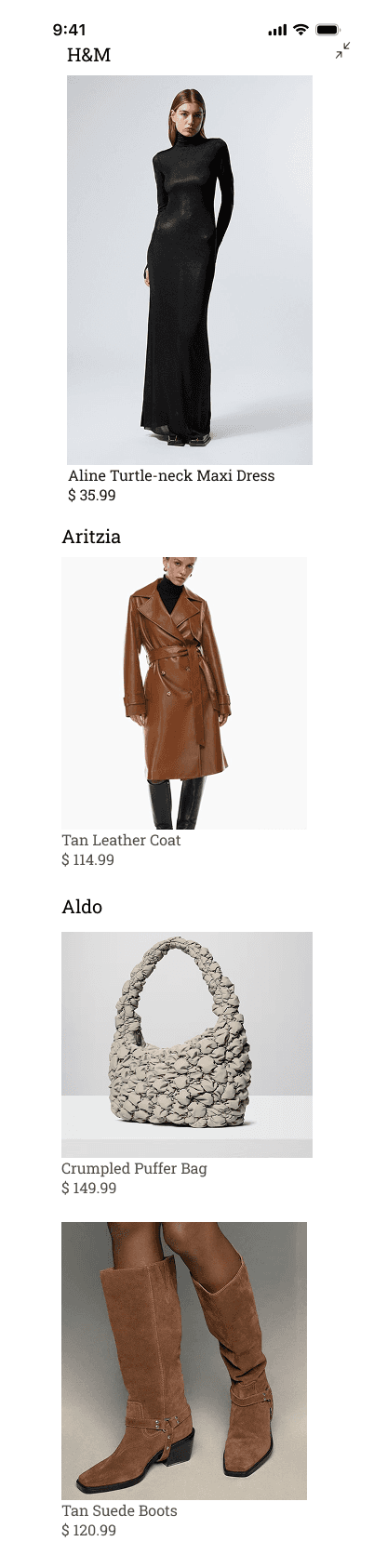
In case the user decides to shop by themselves, they will be provided with a personalized mall map and shopping cart -highlighting the stores and the products chosen during the consultation.
Otherwise, they user may sit back and relax in the lounge until their shopping bags arrive.
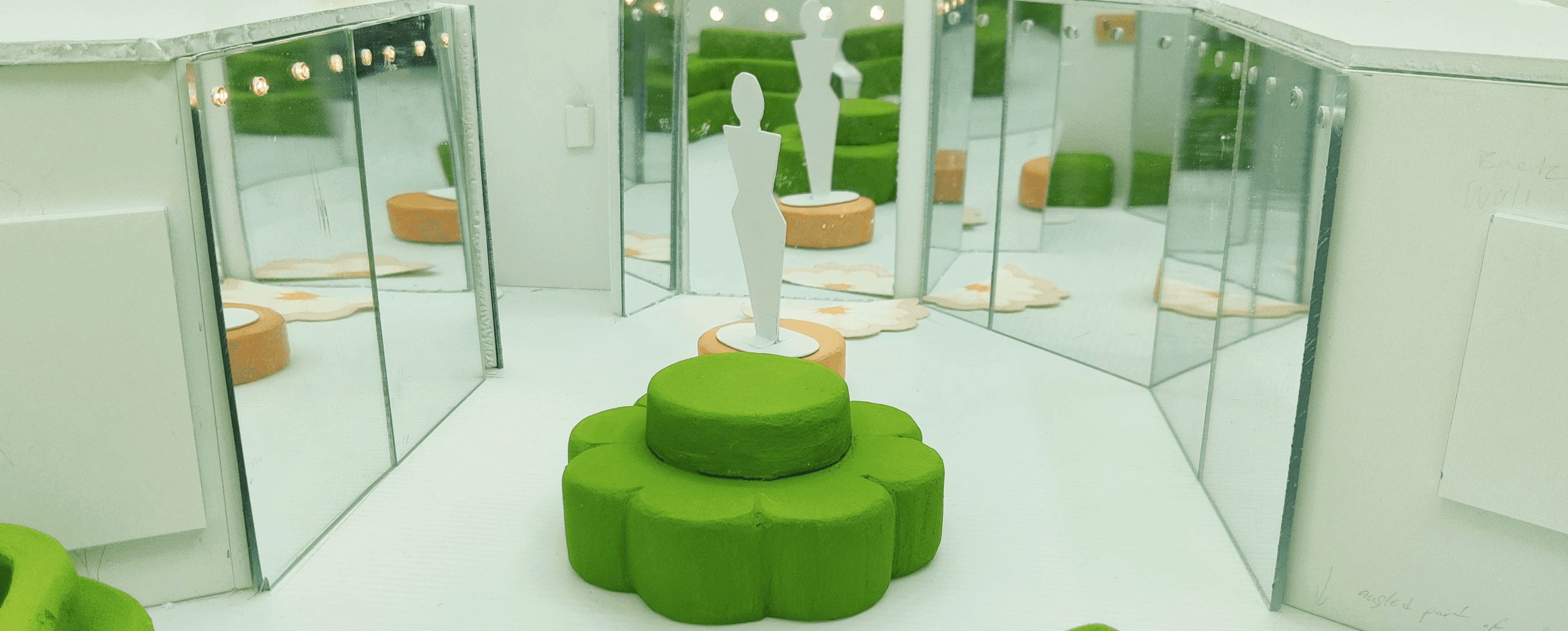
The fitting room layout encourages self expression and fosters a relaxed social atmosphere where users can share styling tips exchange and collaborate on outfit ideas.
All fitting rooms are operated through a card just like in a hotel. Inserting the card into the respective placeholder of the rooms provides power in the room. This specification creates a sense of luxury and unique experience for the client.
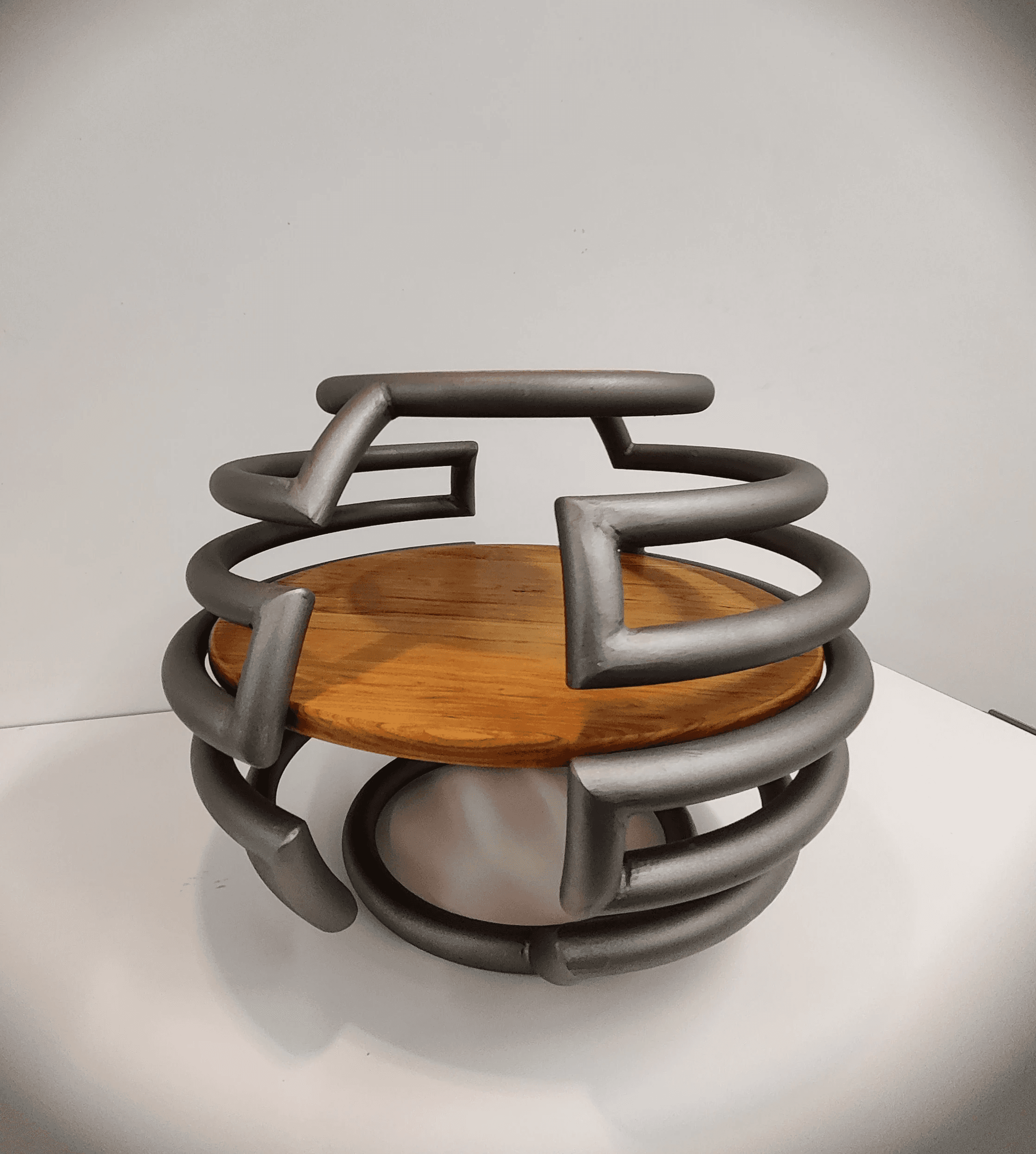
The rotating platform outside of the fitting room is allows the client to get a 360 degree view of their outfit. This has been created in line with current trends and makes the client feel like they are the “start of the show”.
Goal
Meth0dology
Insights
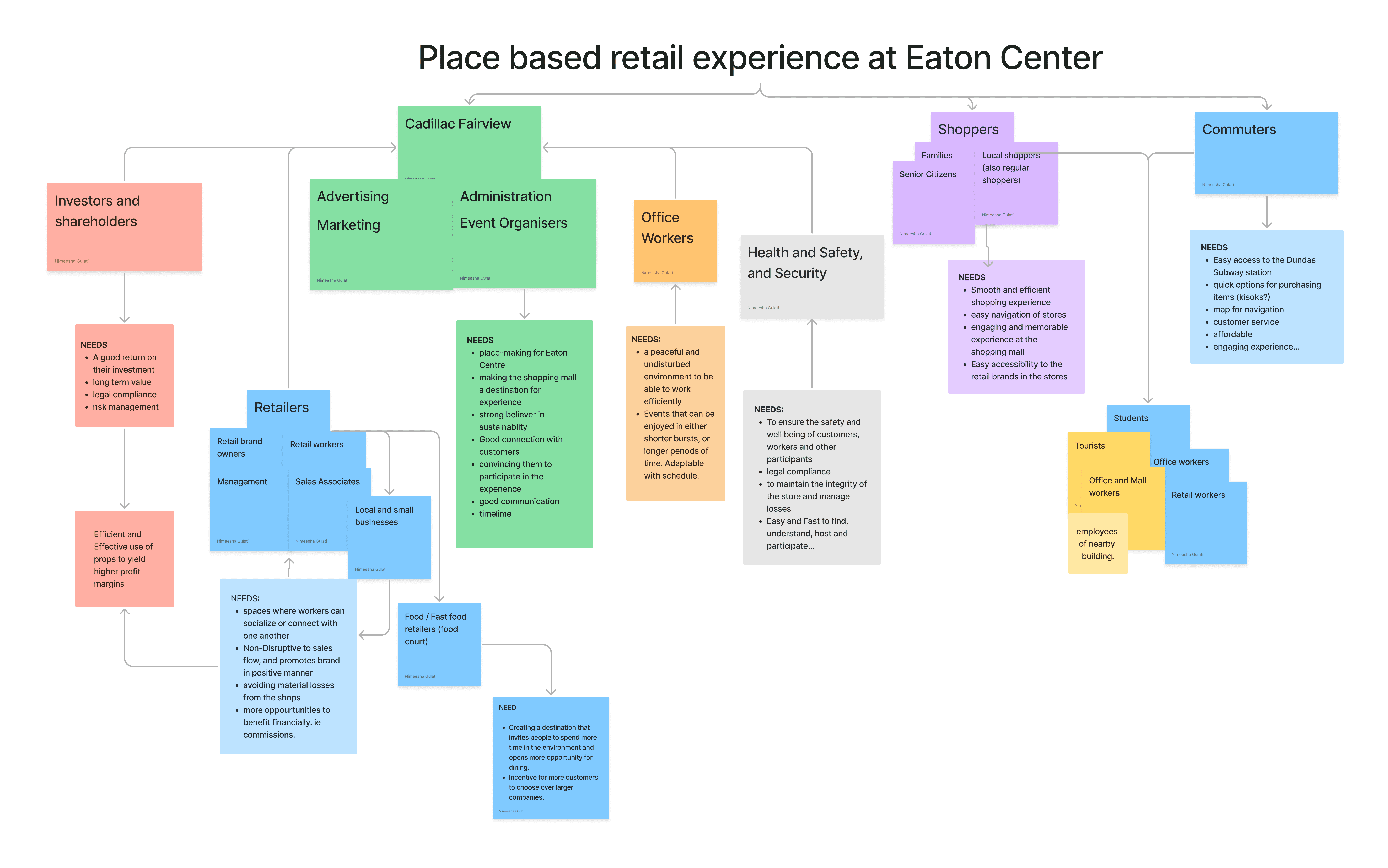
Users visit the mall to socialize, but there are no non-food-court areas to sit and hang out without pressure to spend money.
Commuters and students use the mall as a transit hub and are completely unaware of events or new store openings.
shoppers today want "Exceptional Customer Experiences," not just products on shelves.
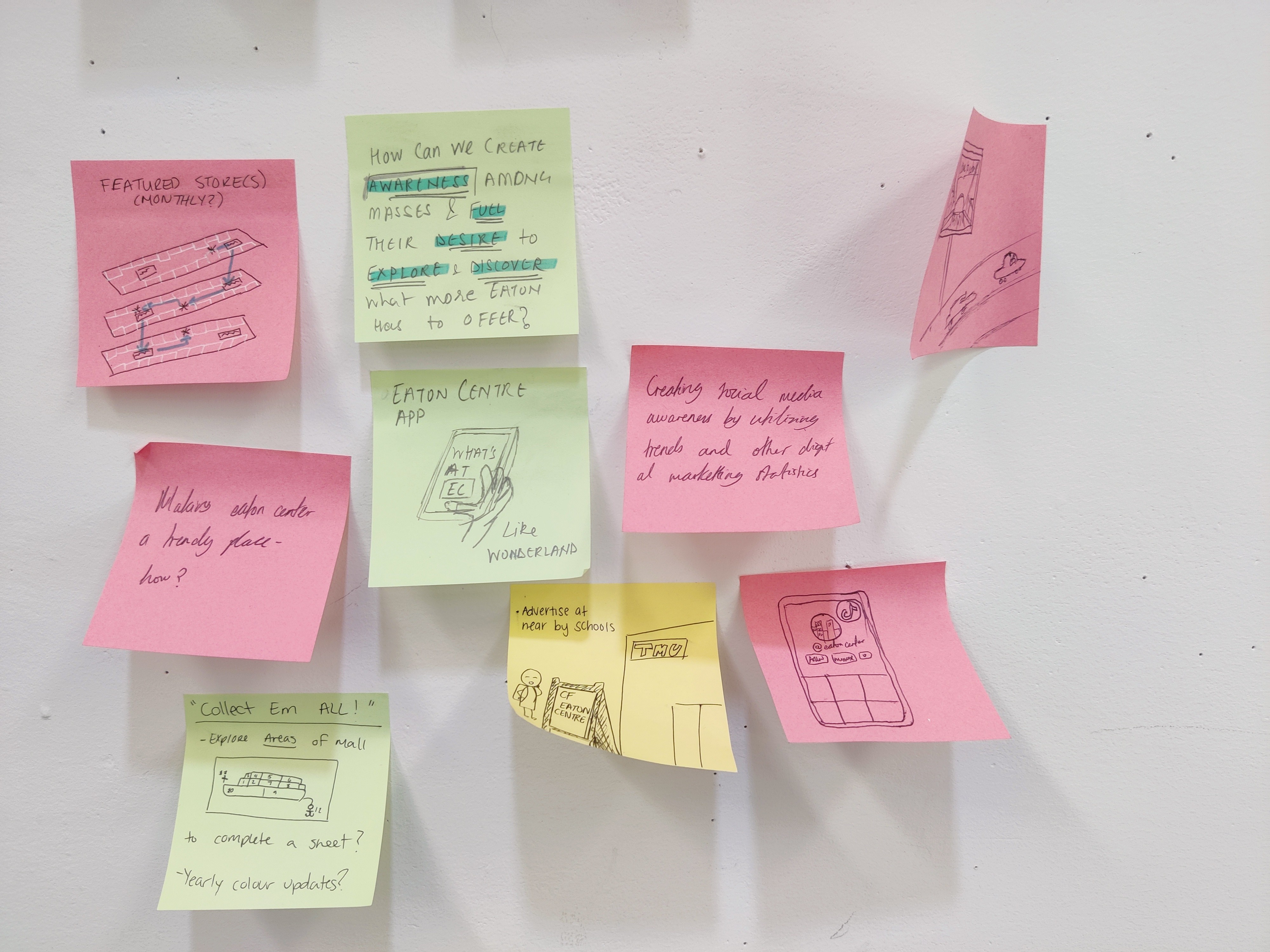
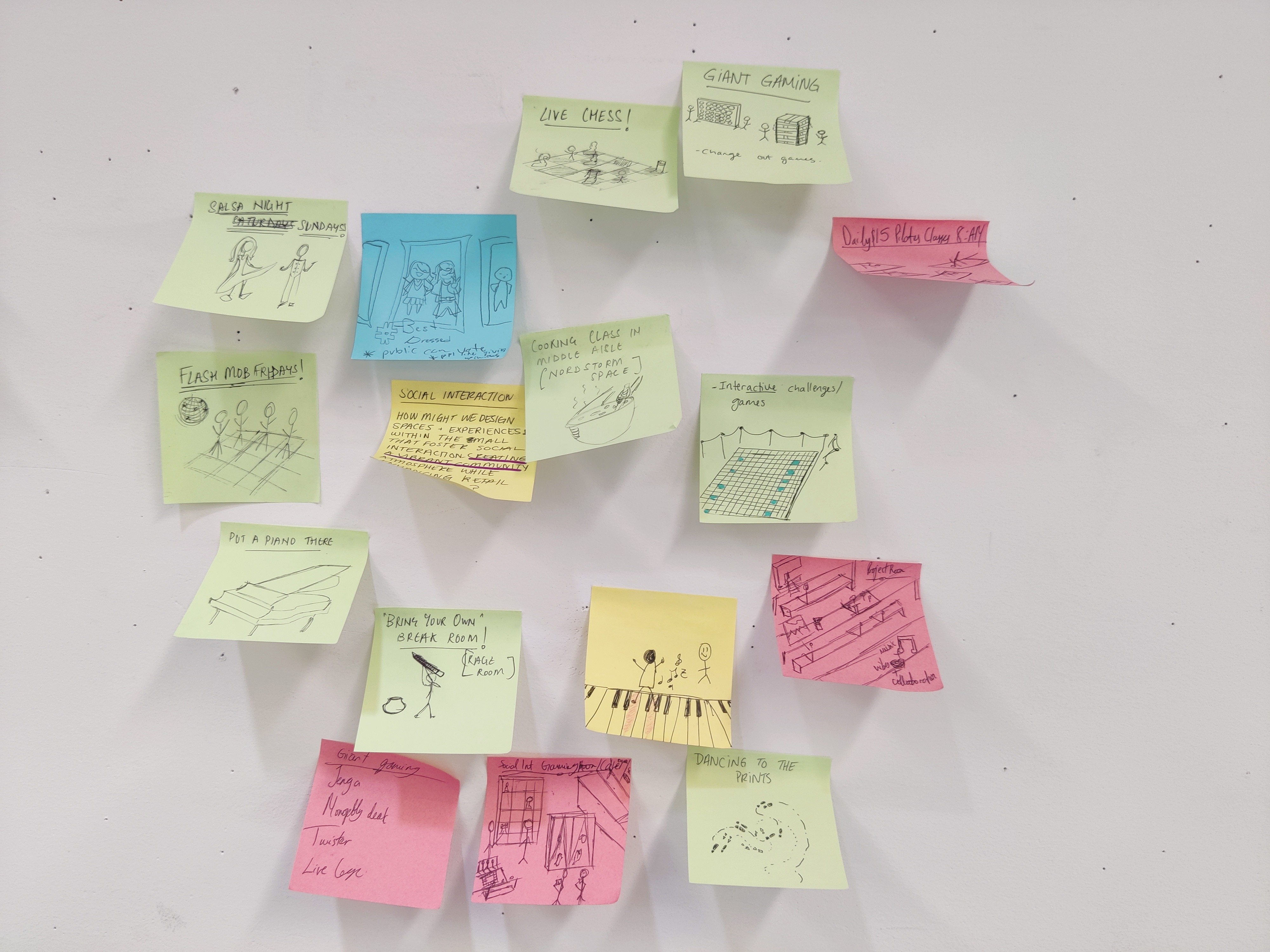
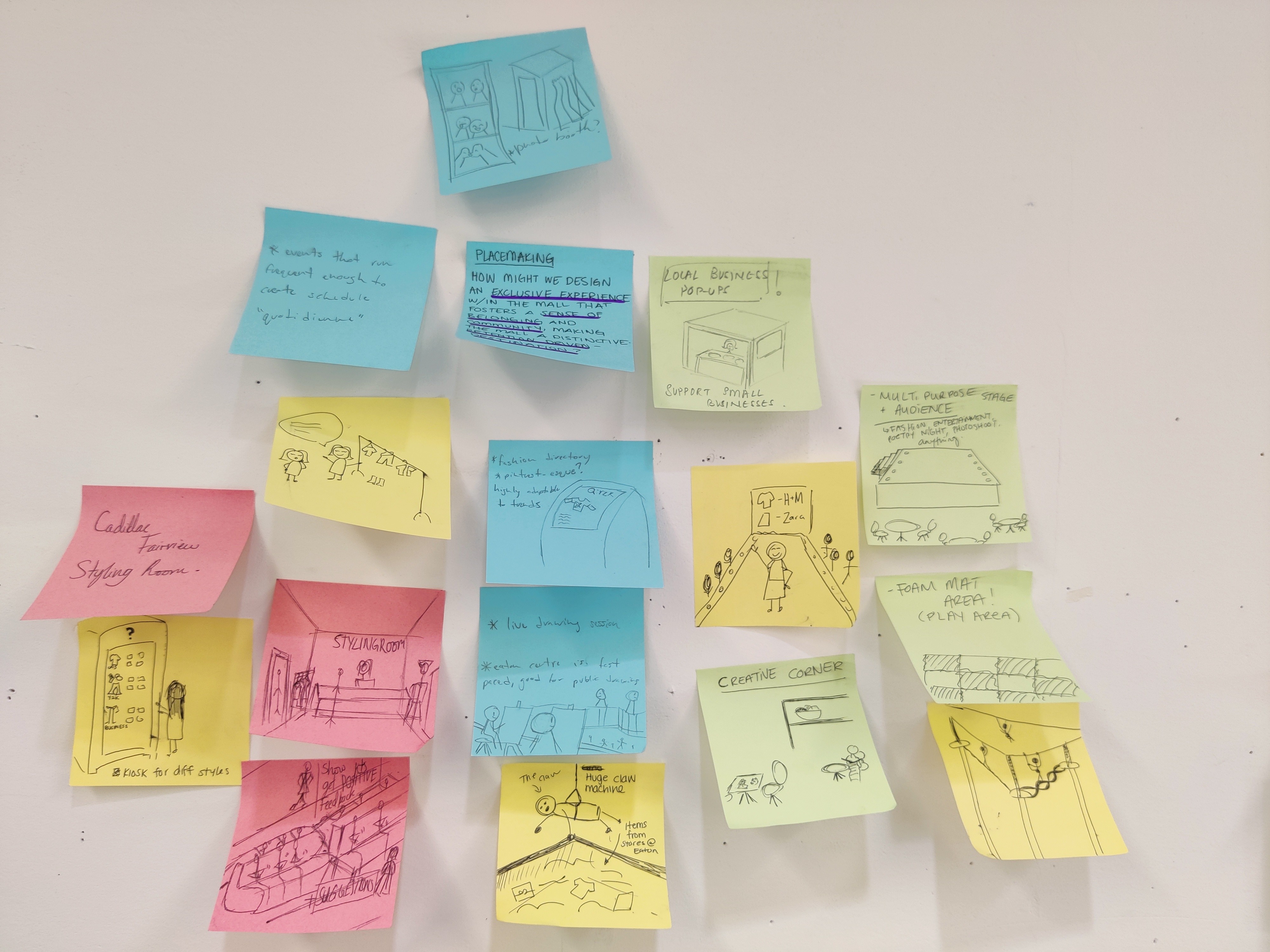
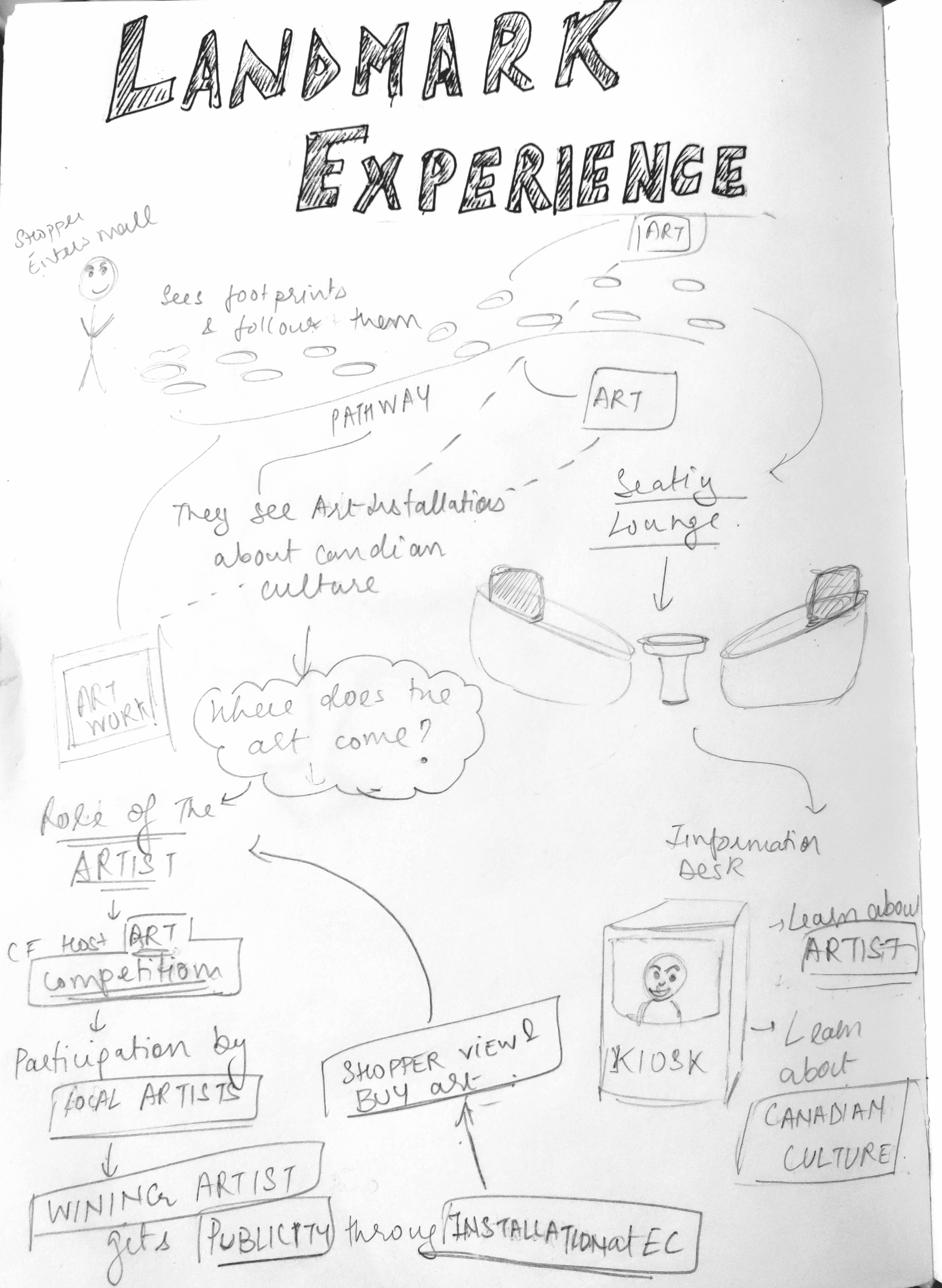
The team decided to not move forward with this concept. Upon testing we realized that this is overcomplicated and users did not respond well during the concept testing.
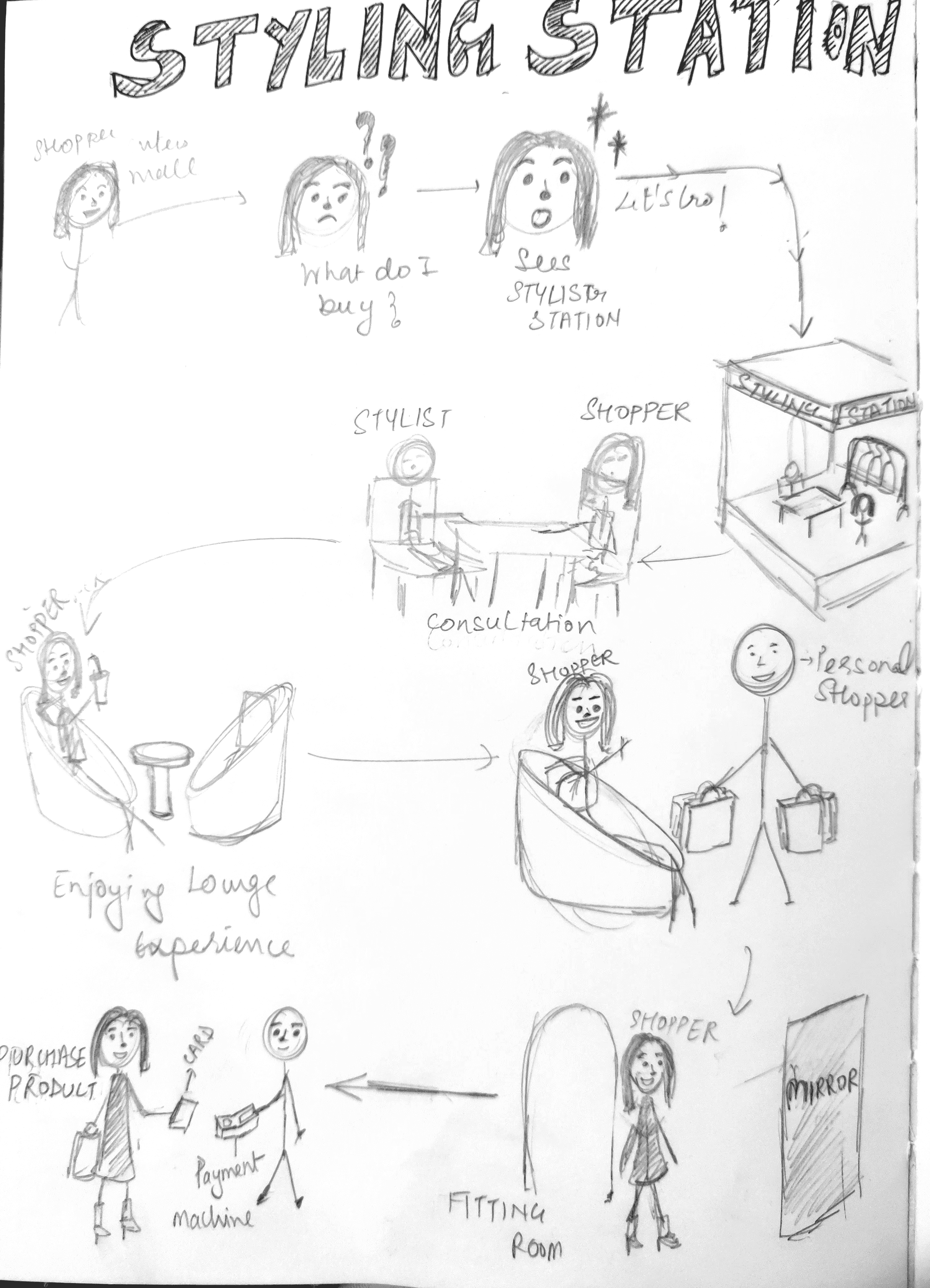
The team decided to move forward with this concept. Upon testing, our user group's interest leaned towards this concept as it directly addresses the need for "personalization" and "luxury" while solving the "discovery" problem by guiding users to new stores they wouldn't find themselves.
Lo-Fi Prototypes & concept testing
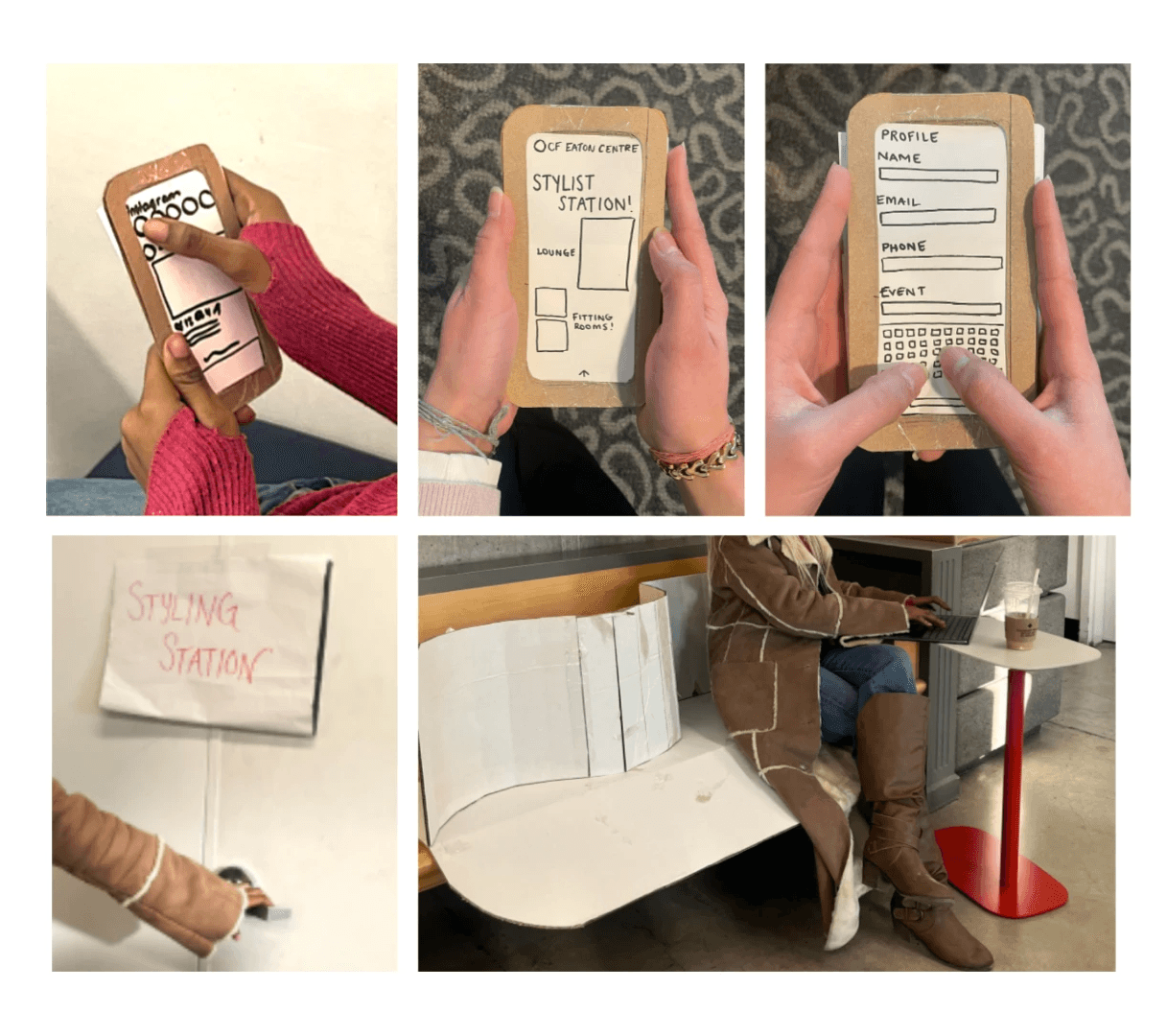
User feedback
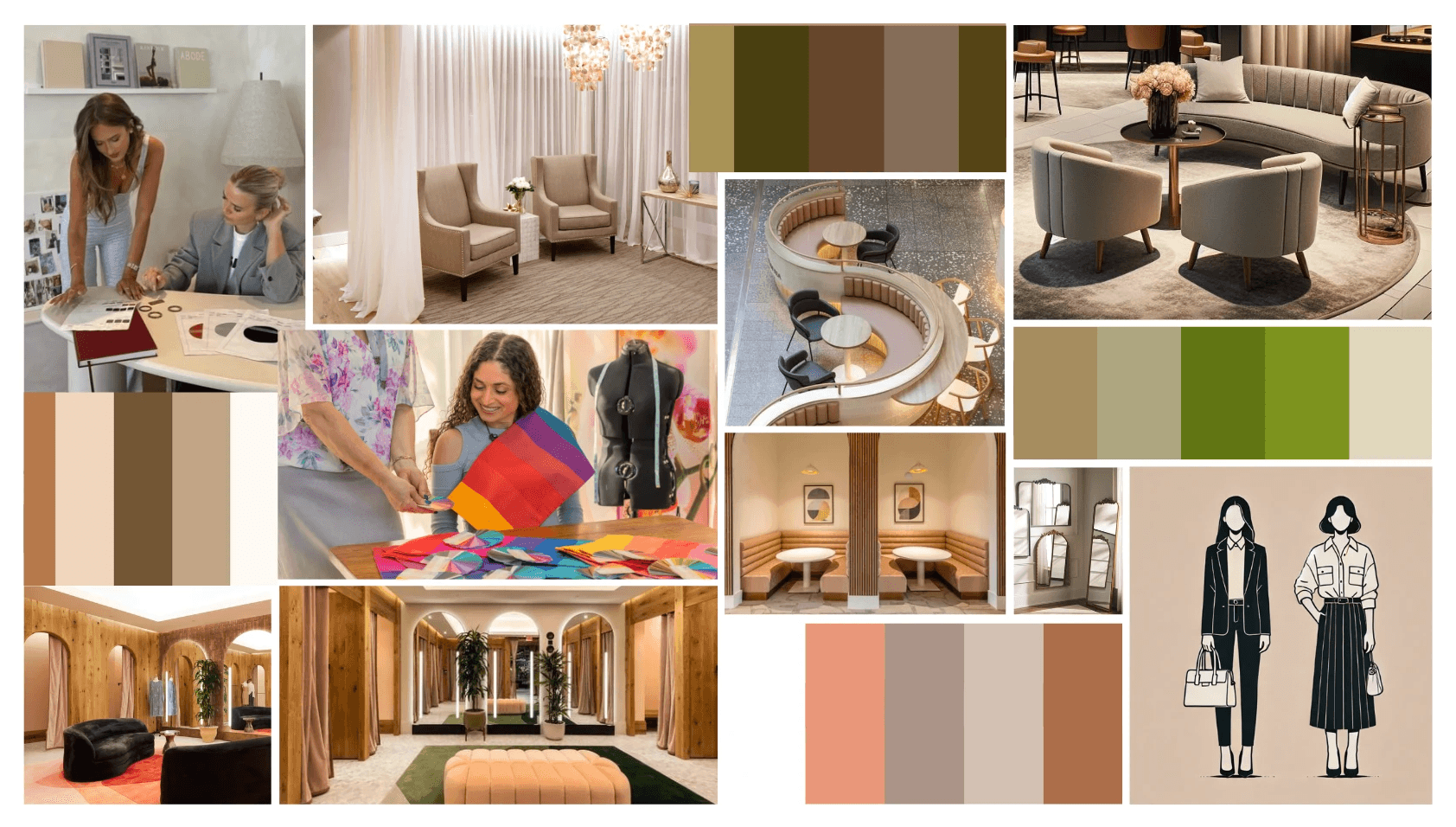
Moodboard
Mock up Prototyping
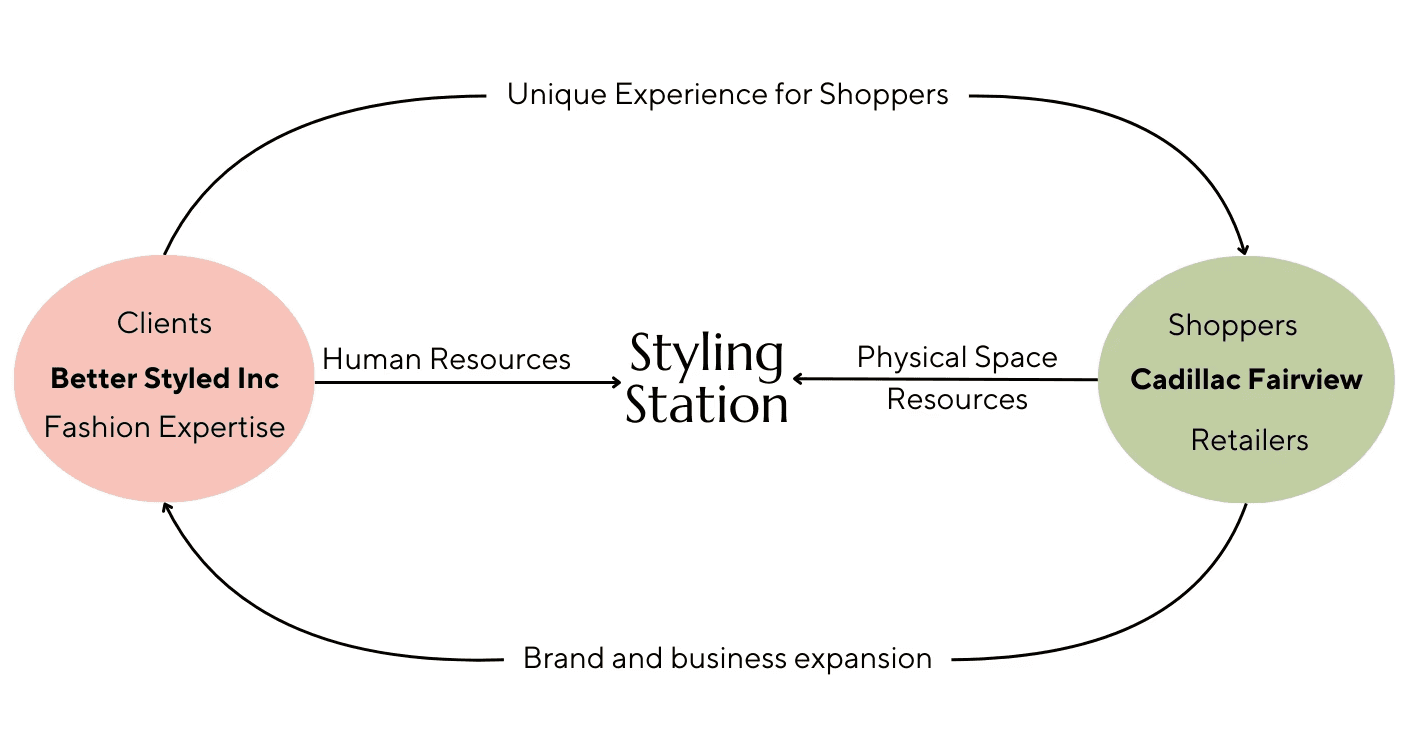
Better Styled Inc, a Toronto-based personal styling company, would function as an independent tenant within CF properties. This arrangement ensures that CF does not own or directly manage the consultancy, thereby mitigating potential conflicts of interest with existing retailers.
Implementing this model would mean:
No Implementation and Maintenance Costs
No Operational Complexity
No Conflict of Interest with the Retailers
CF will not be responsible for recruiting and managing a panel of expert fashion stylists.
This approach fosters a collaborative and balanced ecosystem, benefiting both CF and its retail tenants while enhancing the overall shopping experience for customers.
This project taught me that a great user experience must also be a viable business model. Pivoting to a third-party partnership was key to getting stakeholder buy-in. I learned to design not just the physical space (fitting rooms) but the intangible time-based experience (booking, waiting, consulting). If I were to continue, I would develop the "Better Styled Inc." inventory system and run a live pilot in a pop-up space to gain better understanding of the space operations.
Nimeesha Gulati
Toronto, On
Created in framer
@2026